What is Space?
This post examines the realness of our space perception. (Why did you think this blog was called Unreal?)
Includes posts on physics, philosophy, sciences, quantitative finance, economics, environment etc.
This post examines the realness of our space perception. (Why did you think this blog was called Unreal?)
This unpublished article is a sequel to my earlier paper (also posted as Are Radio Sources and Gamma Ray Bursts Luminal Booms?). This blog version contains the abstract, introduction and conclusions. The full version of the article is available as a PDF file.
One simple question. For some of us to be wealthy, is it necessary to keep some others poor?
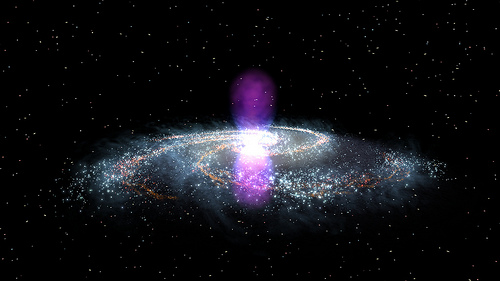
This post is the blog version of my article published in the International Journal of Modern Physics D (IJMP-D) in 2007, soon to become the Top Accessed Article of the journal by Jan 2008. Although it might seem like a hard core physics article, it is in fact an application of the philosophical insight permeating this blog and my book.
People present the Big Bang theory in physics pretty much like Evolution in biology. But I feel that it is disingenuous to do that. To me, it looks as though the Big Bang theory is so full of patchwork, such a mathematical collage to cook up something that is consistent with GR that it is hard to imagine that it corresponds to anything real. Here is a short list of my trouble with the theory.
Siddhartha by Hermann Hesse, reviewed here more from a philosophical rather than a literary perspective.
This post is an abridged online version of my article that appears in Galilean Electrodynamics in November, 2008. [Ref: Galilean Electrodynamics, Vol. 19, No. 6, Nov/Dec 2008, pp: 103–117]
It can be viewed as a good summary of my book, The Unreal Universe, with all the gory mathematical details. Originally written for a professional audience, this post may interest my physicist friends, especially those with a philosophical openness in their beliefs.
Here is a look at the causes and effects of the surge in food and energy prices. Among the myriad of economic reasons conjectured to be behind this so-called silent tsunami, I feel that the influx of institutional investment and speculation is the most likely cause. I present my personal views in this article. Originally written for the Wilmott Magazine, this article contains a bit of technical analysis.
Morality is considered a cognitive manifestation. Can we find some genetic basis for what we consider good and evil? Could the philosophical domain of ethics come under the purview of evolutionary biology?
Does evolution still work among human beings? Or, have we messed up the potential genetic advantages of random mutations to such an extent that we have stopped evolution on its track?
Evolution is one of those funny things — since we are its end products, our thought processes are not quite big enough to grasp all its implications. At least, not right away. Here is a look at what logic means, and what beauty means in terms of evolution.